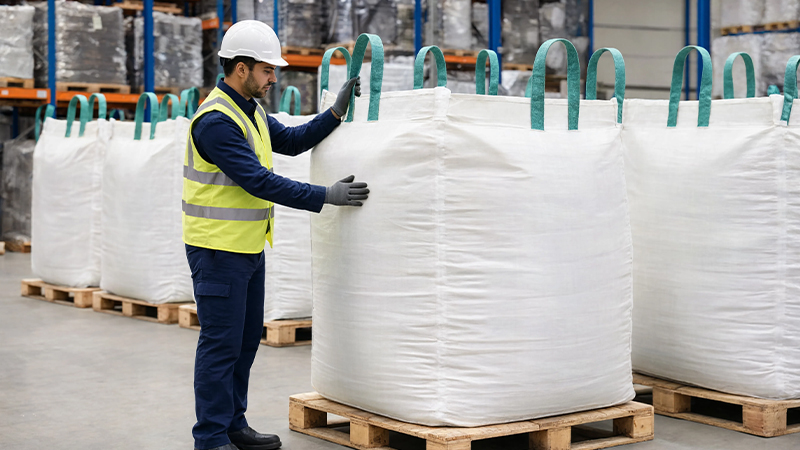
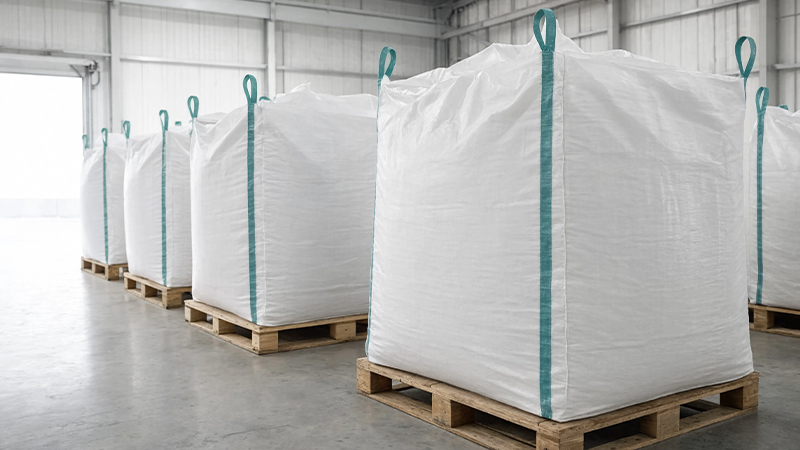
When selecting Flexible Intermediate Bulk Containers (FIBCs), often referred to as jumbo bags or bulk bags, understanding the exact Safety Factor (SF) rating is critical to operational safety, product security, and international regulatory compliance[cite: 3, 4]. A bag's Safety Factor defines the ratio between its ultimate load-to-failure threshold and its Safe Working Load (SWL)[cite: 3]. Choosing the correct rating ensures that your material handling procedures remain safe and cost-effective across every stage of storage, lifting, and transport[cite: 3, 4].
What is a 5:1 Safety Factor (Single-Trip FIBC)?
A 5:1 Safety Factor signifies that an FIBC is designed and certified for single-trip applications[cite: 3]. Under standard testing procedures, a 5:1 certified bag rated for a Safe Working Load of 1000 kg must withstand a minimum breaking load of 5000 kg (5 times its rated capacity) before structural failure occurs[cite: 3]. Key characteristics of 5:1 single-trip bags include:
- Single Fill & Discharge Cycle: Engineered specifically to be filled once and transported to its final destination[cite: 3].
- Recyclability & Cost Efficiency: Once emptied, these single-trip bags are intended for recycling rather than refilling, making them an economical choice for bulk export and one-way distribution[cite: 3].
- Fabric Specifications: Constructed with heavy-duty polypropylene fabric (typically ranging from 200 g/m² to 240 g/m²) tailored for high tensile strength during its singular operational cycle[cite: 3, 5].
What is a 6:1 Safety Factor (Multi-Trip Reusable FIBC)?
A 6:1 Safety Factor indicates that the bulk bag is engineered for standard-duty multi-trip or reusable applications[cite: 4]. To achieve a 6:1 rating, the bag undergoes rigorous cyclic top-lift testing and ultimate load-to-failure testing[cite: 4]. For instance, a 1000 kg SWL bag with a 6:1 SF is tested to withstand failure loads exceeding 10,000 kg (over 100 kN)[cite: 4]. Features of 6:1 reusable bags include:
- Multi-Trip Durability: Designed to sustain repeated cycles of filling, lifting, transport, and discharging without compromising structural integrity[cite: 4].
- Enhanced Safety Margins: Provides superior resistance to dynamic forces, sudden jolts, and stress encountered during frequent forklift re-handling and stacking[cite: 4].
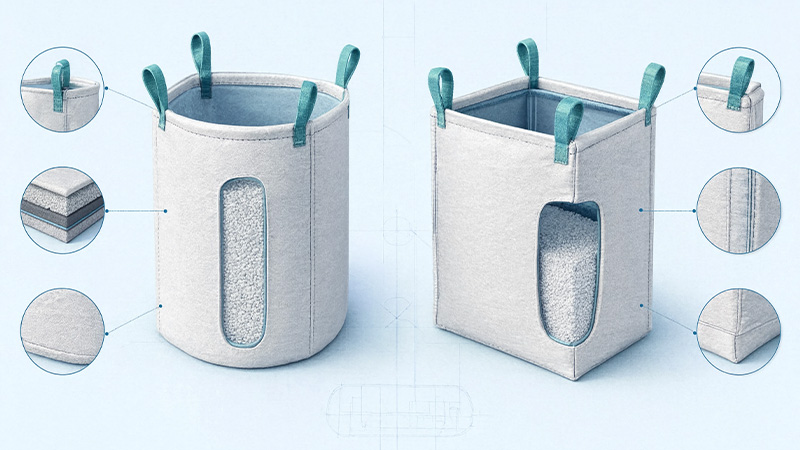
- Reinforced Construction: Features multi-layer reinforcement at stress points, heavy-duty stitching, and robust body fabric to ensure long-term wear resistance[cite: 4].
Key Considerations for Your Supply Chain
Selecting between a 5:1 and a 6:1 FIBC requires evaluating your supply chain workflow[cite: 3, 4]. If your products are shipped to end customers where the packaging will not be returned, 5:1 single-trip bags provide optimal safety and cost-efficiency[cite: 3]. However, if you operate closed-loop logistics systems, internal facility transfers, or multi-use distribution networks, investing in 6:1 certified reusable FIBCs ensures long-term safety, compliance, and durability[cite: 4].