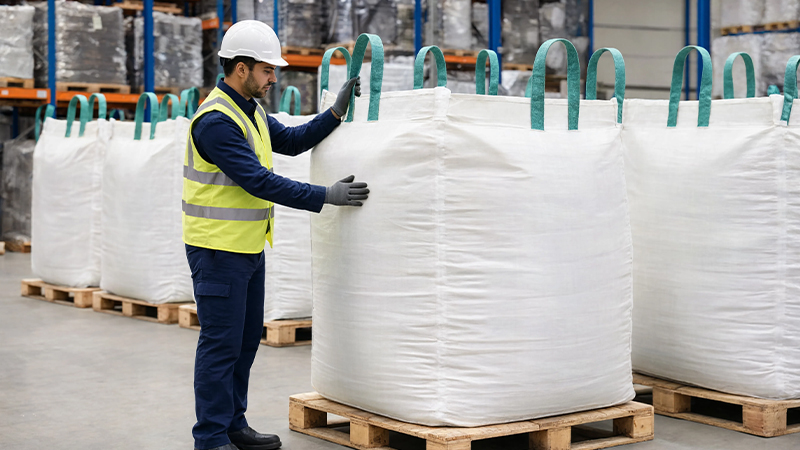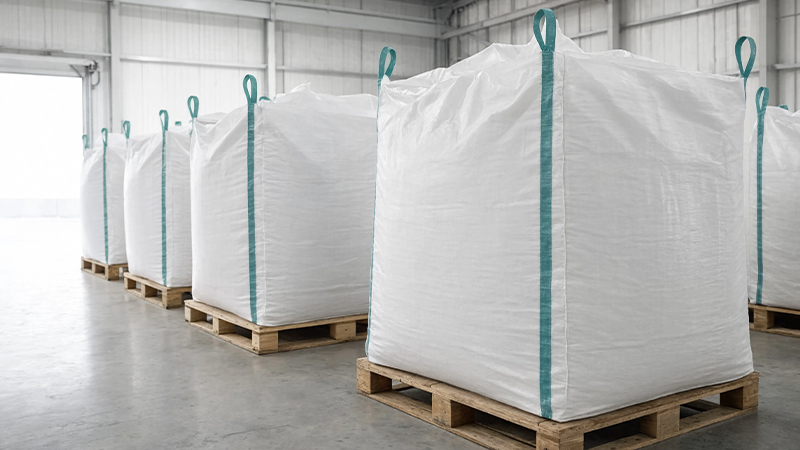
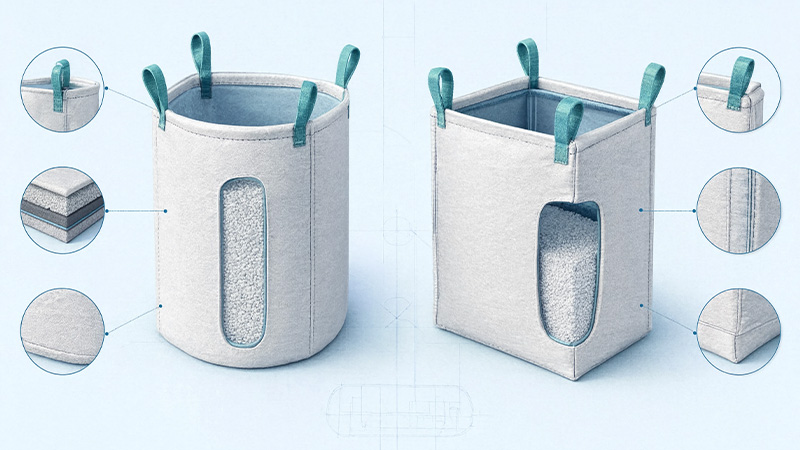
The structural geometry of an FIBC bulk bag plays a fundamental role in how it handles weight, maintains shape, and performs under vertical load during transport and warehousing[cite: 3, 5]. Two of the most widely adopted design configurations in modern industrial packaging are Circular Fabric and U-Panel FIBCs[cite: 3, 5]. Understanding the structural differences between these designs will help you select the ideal container for your bulk materials[cite: 3, 5].
1. Circular Fabric FIBCs (Tubular Construction)
Circular FIBCs are manufactured using a seamless tubular polypropylene fabric body[cite: 3, 4]. Because the main body is woven as a single continuous tube, vertical side seams are entirely eliminated[cite: 3, 4].
- Superior Leak Resistance: Without vertical body seams, circular bags provide an exceptional barrier against fine powder leakage and sifting, making them ideal for fine chemicals, minerals, and food powders[cite: 3].
- Natural Cylindrical Shape: When filled, circular bags expand evenly into a rounded cylindrical profile, ensuring uniform weight distribution across the base fabric[cite: 3].
- Reinforced Base Options: To support heavy payloads up to 1500 kg SWL, circular designs frequently incorporate double-layered base fabrics (e.g., 2 × 150 g/m²) to prevent stress tears during discharge[cite: 9, 10].
2. U-Panel FIBCs (Three-Piece Panel Construction)
U-Panel FIBCs are constructed using three main fabric components: one continuous piece of polypropylene fabric that forms a 'U' shape (creating the bottom and two opposing sides) and two separate side panels sewn along the edges[cite: 5].
- High Squareness & Stacking Stability: The three-panel structure allows the bag to retain a defined square shape when filled, maximizing cubic space utilization inside shipping containers and transport trucks[cite: 5].
- Heavy Load Bearing Strength: The U-panel architecture distributes lifting force directly through the main continuous fabric panel, providing outstanding performance for high Safe Working Loads (SWL) ranging from 1000 kg to 1500 kg[cite: 5, 8, 11].
- Versatile Application: Excellent for granular products, aggregates, heavy raw materials, and dense agricultural goods[cite: 5, 11].
Which Design Suits Your Operational Needs?
When choosing between Circular and U-Panel bags, consider your material's physical state and storage constraints[cite: 3, 5]. For fine powders where seam-sifting is a concern, circular bags offer an ideal seamless solution[cite: 3]. For dense, heavy bulk goods where container space optimization and rigid stacking shape are paramount, U-Panel FIBCs deliver superior structural stability and performance[cite: 5, 11].